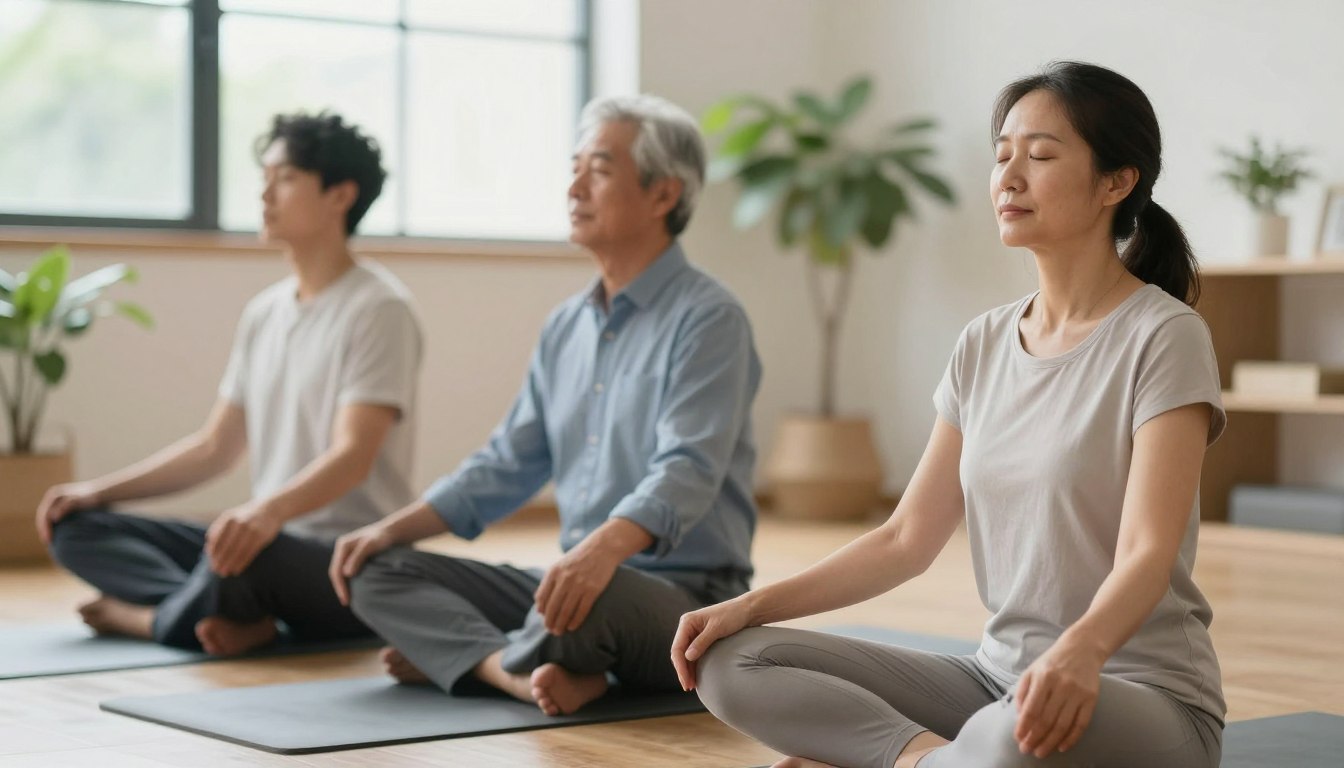
Did you know that nearly 80% of American adults report feeling significant stress at least once a week? This constant pressure often leaves us feeling drained and disconnected from our own bodies. However, you possess a powerful tool that is always available to help you regain your focus.
By utilizing simple breathing exercises for instant calm, you can shift your mental state from overwhelmed to centered in just a few minutes. These instant calm techniques are designed to be used anywhere, whether you are at your desk or stuck in traffic.
Intentional breathwork acts as a bridge between your mind and your nervous system. It allows you to take control of your physiological responses to daily challenges. Let us explore how these accessible methods can help you reclaim your peace of mind today.
Key Takeaways
- Stress affects the majority of American adults on a weekly basis.
- Breathwork provides a portable solution to manage daily overwhelm.
- You can shift your mental state in just a few minutes.
- These methods help you regain control over your nervous system.
- Simple techniques are effective regardless of your current location.
The Science Behind Breathing Exercises for Instant Calm
The secret to instant calm lies deep within your body’s complex nervous system. When you feel overwhelmed, your body often enters a fight or flight state, which triggers a rapid heart rate and shallow breathing. By using specific relaxation techniques, you can manually override this stress response and signal your brain that you are safe.
How Controlled Breathing Affects Your Nervous System
Your autonomic nervous system manages involuntary functions like digestion and heart rate. It consists of two main branches: the sympathetic system, which handles stress, and the parasympathetic system, which promotes rest. When you practice calming breath exercises, you stimulate the vagus nerve.
This stimulation activates the parasympathetic nervous system, effectively hitting the brakes on your stress response. As your heart rate slows down, your blood pressure naturally decreases. This physiological shift is the primary reason why intentional breathing is so effective for immediate relief.
The Connection Between Breath and Emotional Regulation
There is a direct link between the rhythm of your breath and your emotional state. When you are anxious, your breathing becomes erratic and short, which reinforces feelings of panic. By consciously slowing your inhale and exhale, you send a calming signal to the brain’s emotional centers.
This practice helps you regain control over your thoughts during high-pressure moments. Consistent use of these relaxation techniques builds a stronger foundation for mental resilience over time. Incorporating calming breath exercises into your daily routine allows you to manage your emotions with greater ease and clarity.
Step-by-Step Techniques for Immediate Stress Relief
Mastering your breath is the fastest way to regain control when life feels overwhelming. By utilizing deep breathing exercises, you can shift your body from a state of tension to one of calm in just a few minutes. These techniques are designed to be simple, effective, and accessible whenever you need stress relief through breathing.
Box Breathing for Focus and Stability
Box breathing is a favorite among high-performance professionals and athletes because it creates a sense of mental clarity. This rhythmic pattern helps stabilize your nervous system during chaotic moments.
How to perform the four-count cycle
- Inhale slowly through your nose for a count of four.
- Hold your breath gently for a count of four.
- Exhale steadily through your mouth for a count of four.
- Pause and hold your lungs empty for a final count of four.
The 4-7-8 Method for Deep Relaxation
If you struggle with racing thoughts, the 4-7-8 method acts as a natural tranquilizer for the nervous system. It encourages a longer exhale, which is the key to unlocking deep relaxation.
Timing your inhales, holds, and exhales
Start by placing the tip of your tongue against the ridge of tissue just behind your upper front teeth. Inhale quietly through your nose for four seconds, then hold that breath for seven seconds. Finally, exhale forcefully through your mouth, making a whooshing sound for eight seconds.
Diaphragmatic Breathing to Lower Heart Rate
Often called belly breathing, this technique ensures you are using your full lung capacity. It is highly effective for stress relief through breathing because it signals your heart to slow down.
Engaging the belly for maximum oxygen intake
Place one hand on your chest and the other on your abdomen. As you inhale deeply through your nose, focus on making the hand on your belly rise while keeping the hand on your chest still. This intentional movement ensures you are breathing from the diaphragm rather than taking shallow breaths into your upper chest.
Best Practices for Integrating Mindfulness Breathing into Your Day
Building a sustainable habit of calming breath exercises requires just a few smart strategies. When your schedule feels overwhelming, intentionality becomes your greatest ally. By preparing your environment and mind, you ensure that mindfulness breathing remains a consistent part of your wellness journey.
Creating a Dedicated Space for Quick Relaxation Methods
You do not need a large room to practice quick relaxation methods effectively. Even a small corner of your office or a quiet spot in your living room can serve as a sanctuary. The goal is to associate a specific physical location with a sense of calm.
If you share your space, consider using a comfortable chair or a specific cushion that signals it is time to pause. Keeping this area tidy helps your brain shift gears quickly. When you sit down, your body will naturally begin to relax because it recognizes the environment.
Using Anchors to Remember Your Anxiety Breathing Exercises
Anchors are daily habits that act as natural triggers for your anxiety breathing exercises. By linking a new practice to an existing routine, you make it much harder to forget. For example, you might choose to take three deep breaths every time you pour a cup of coffee.
Other effective anchors include waiting for a computer to load or finishing a phone call. These small moments provide the perfect window to reset your nervous system. Consistency is the key to turning these brief pauses into a powerful long-term habit.
Setting phone reminders for short breaks
Technology can be a helpful partner in your wellness routine. Setting gentle phone reminders throughout the day ensures you never go too long without a mental break. These notifications act as a friendly nudge to step away from your screen and focus on your breath.
Start by scheduling two or three alerts during your busiest hours. Over time, you may find that you no longer need the alarm because the habit has become second nature. Embracing these tools allows you to maintain your inner peace regardless of how hectic your day becomes.
Conclusion
Transforming your daily routine starts with the simple act of focusing on your breath. You hold the power to shift your mental state by committing to regular deep breathing exercises. This practice builds a foundation for lasting emotional stability.
Consistent stress relief through breathing acts as a natural tool for your nervous system. You will notice that your ability to handle pressure grows as you repeat these patterns. Mastery of these skills requires patience and a willingness to show up for yourself every single day.
You can rely on these quick relaxation methods whenever life feels overwhelming. Keep these anxiety breathing exercises in your personal toolkit to maintain your focus during busy moments. Small, intentional shifts in your breathing rhythm lead to significant changes in your overall well-being.
Start your journey toward a balanced life by dedicating just a few minutes to your breath today. Your commitment to this practice creates a path toward a calmer and more centered version of yourself. Embrace the process and enjoy the clarity that comes with a steady, mindful approach to your health.